The HCAC public history focused digital archive cataloging is an ongoing process, and we may update this record as we conduct additional research and review. We welcome your comments and feedback if you have more information to share about an item featured on the site, please contact us at: HCAC-DigiTeam@si.edu
William Loveless emphasized the importance of community, responsibility, and the evolving role of the church. He reflected on the tragic death of Bruce and Eugenia Johnson, highlighting the dangers of engaging in social issues.
Andrew L. Johnson emphasized the importance of worshiping in spirit and truth, and the need for personal and collective responsibility. Johnson highlighted the ongoing technological, political, and economic revolutions, urging the congregation to prepare for global service, work for peace, and embrace lifelong learning skills.
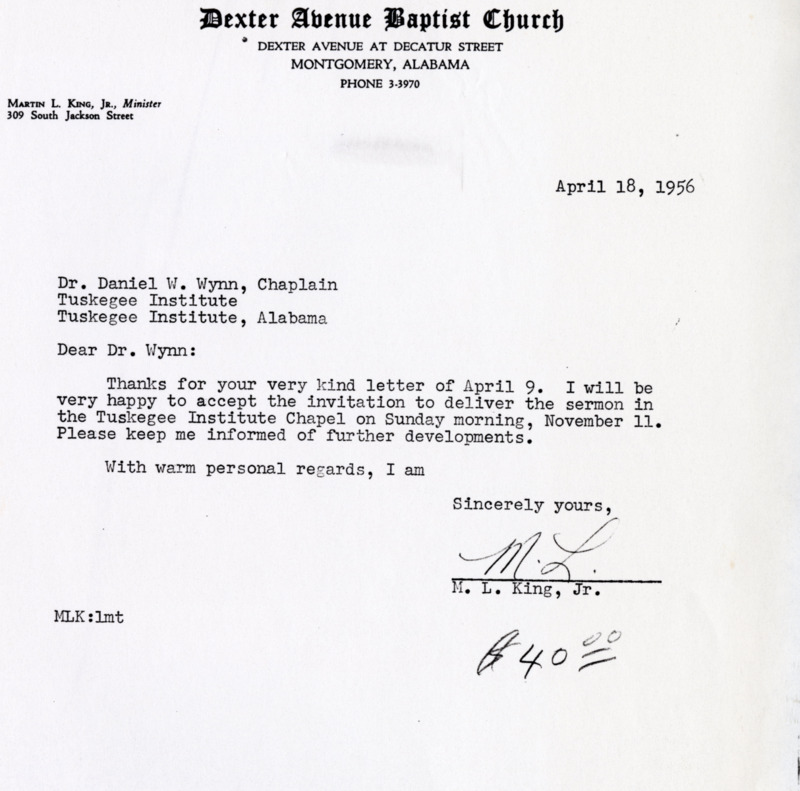
A reply letter from Dr. Martin Luther King Jr. to Chaplain Wynn’s 04/06/1956 letter, informing Chaplain Wynn that he would be happy to speak at the Tuskegee Chapel on 11/11/1956.
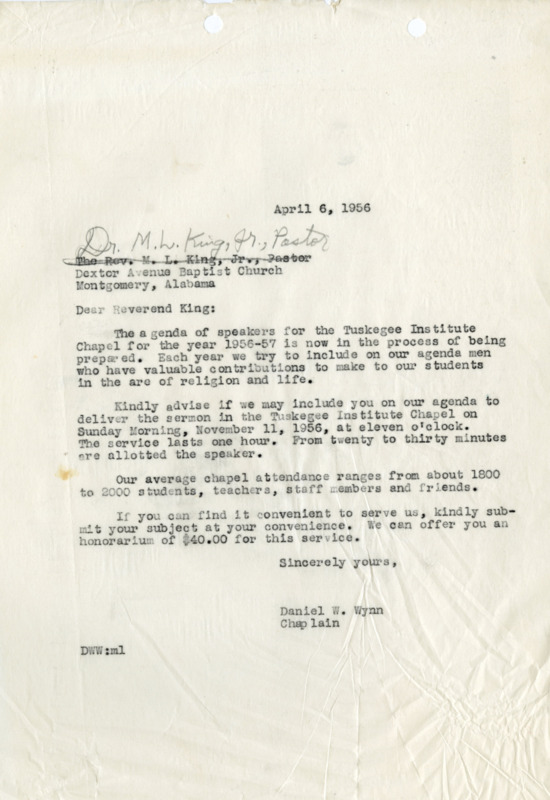
A letter from Chaplain Wynn to Dr. Martin Luther King Jr. on onion paper. The Tuskegee Institute Chapel was in the process of inviting guest speakers to speak to the students, faculty, staff and community. Chaplain Wynn asked if Dr. King could be a guest speaker on 11/11/1956.
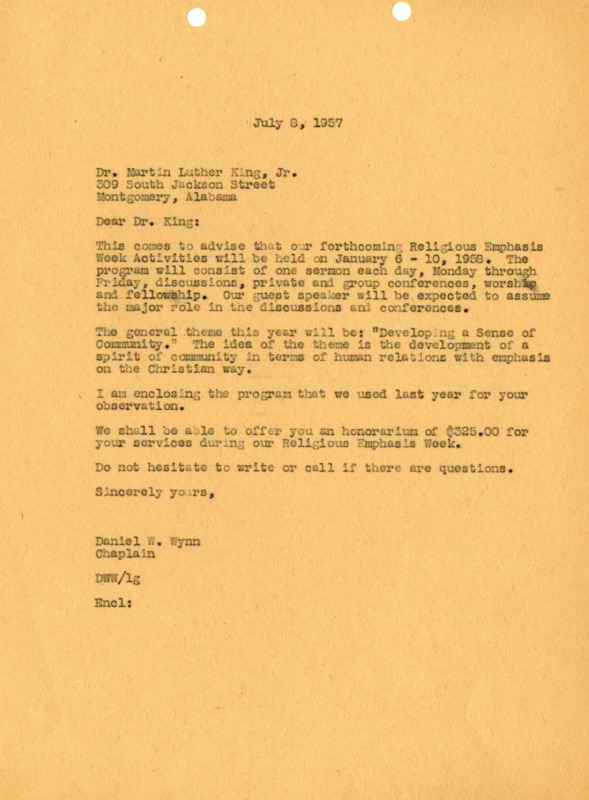
A letter from Chaplain Wynn to Dr. Martin Luther King Jr. advising him on the activities set to take place during the Religious Emphasis Week Activities for Jan 6-10 1958.
A letter from Dr. Martin Luther King Jr. to Chaplain Wynn stating that he would not be able to attend Religious Emphasis Week from Jan 6-10, 1958 due to an overseas trip to India and completing his book.
The 1967 Fall Convocation at Tuskegee Institute celebrated the legacy of its founders and highlighted the contributions of Dr. John A. Hannah, a distinguished educator and civil rights leader, and Miss Dorothy L. Hite, a prominent social worker, was recognized for her humanitarian efforts and leadership in civil rights.
During the 1968 Fall Convocation at Tuskegee Institute, Dr. Luther H. Foster called for unity, cultural focus, and educational excellence in addressing societal challenges facing the Black community, emphasizing wisdom, mutual respect, and a balanced pursuit of human development.
The speaker, Samuel F. Yet, emphasizes the fraternity's role in providing education and opportunities, contrasting past struggles with contemporary issues like education policy and systemic racism.
At the 1972 Fall Convocation, Dr. Frederick D. Patterson emphasized the role of education in fostering clear communication, participatory democracy, and societal progress, while addressing financial challenges in minority institutions and calling for continued excellence and service at Tuskegee Institute.
The 1972 Founder's Day celebration at Tuskegee Institute underscored education's role in overcoming poverty and promoting equality, as Dr. Sidney P. Marland Jr. praised Tuskegee's leadership, announced increased federal funding for Black colleges, and called for continued commitment to minority education and urban studies.
1975 Founders' Day reflects on the lives of three recently deceased senior citizens who were deeply committed to the Tuskegee community and the education of its students. The sermon highlights the necessity of not just hearing God's word but also doing it and growing in faith.
The 1976 Fall Convocation at Tuskegee Institute emphasized faith, community, and personal growth, urging students to uncondition themselves, embrace leadership, and pursue transformative dreams with moral and spiritual strength to help build a better world.
The President’s Essay Contest, sponsored by the Trinity Church of Boston Massachusetts, award prizes to the students who wrote and delivered the best papers on the given subjects assigned for the competition.
Graham Allen, Ronald Reagan, Martin Luther King Jr., and Carl Rowan discussed the role of institutions like Tuskegee University in shaping leaders, the importance of addressing justice and equality, education, and understanding to overcome systemic racism and social divisions.
Ambassador John J. Akar from Sierra Leone on "what is the relevance of Black institutions in a land which we like it or not can not chose to led the inevitability of its multiracism?"
Dr. Bernard C. Watson discussed the historical significance of Tuskegee Institute and its commitment to excellence, while emphasizing the importance of accountability and responsibility for the institution's future.
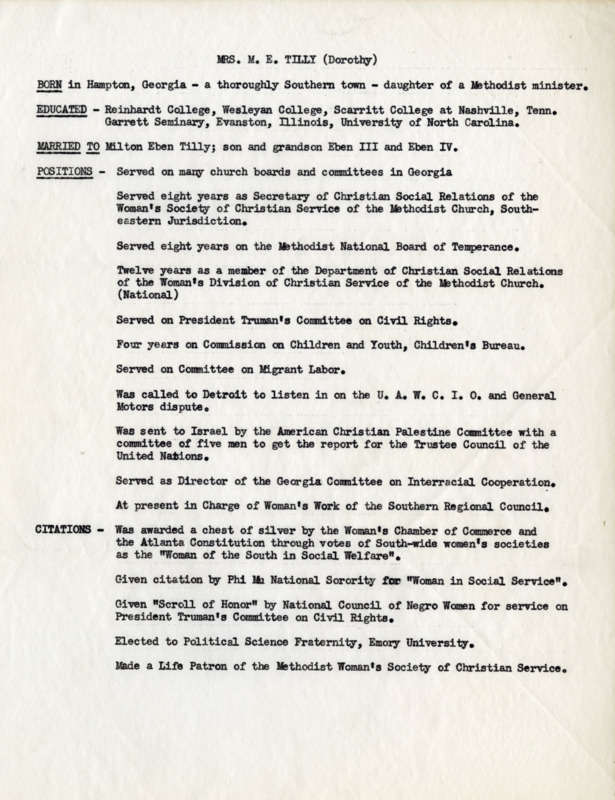
A program created by the Tuskegee Civic Association governing board to show the rest of the organization and community of the accomplishments of Mrs. M.E. Tilly.
12-page document reprinted from Missionary Review of the World. Contains an informational table on the economic, educational, and religious progress of African Americans from 1866 and 1922. Also includes photos and an informational map depicting Black population and education.
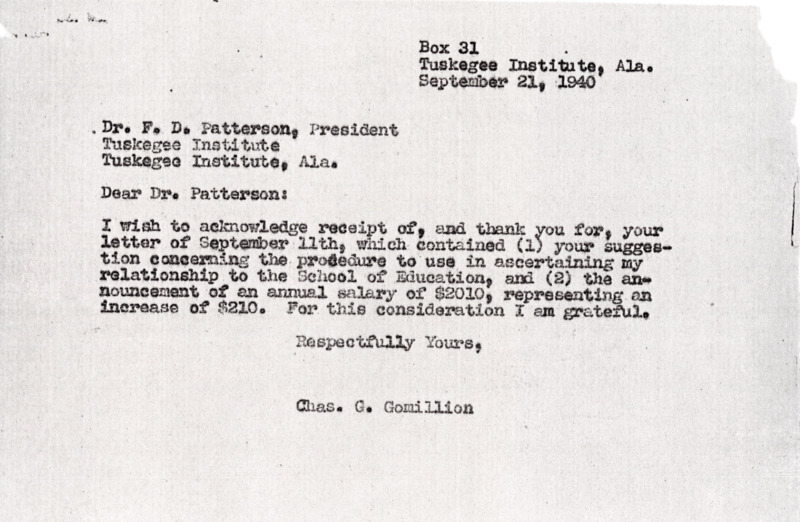
A letter from Charles G. Gomillion to President Frederick D. Patterson acknowledging his receipt of the 09/11/1940 letter and accepting increase in pay to continue working at Tuskegee.
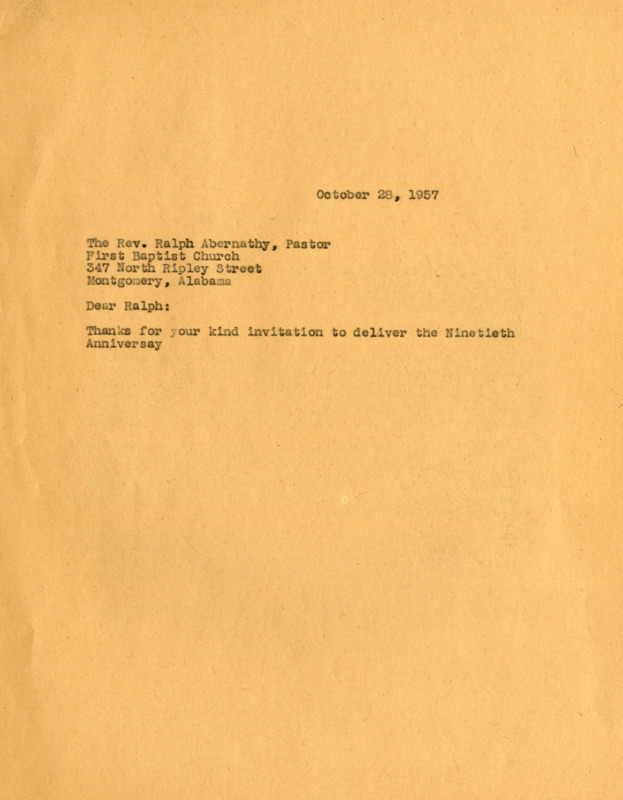
A thank you letter from Chaplain Wynn to Rev. Ralph Abernathy expressing gratitude for the invitation to be guest speaker for First Baptist Church celebration.
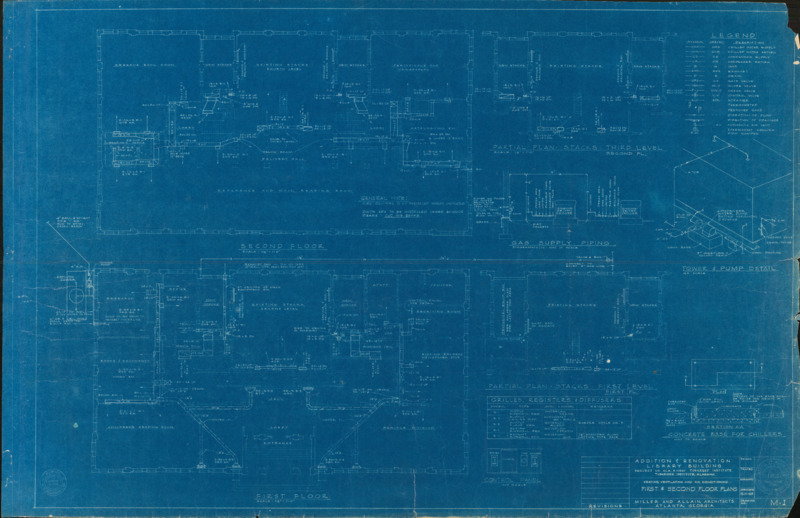
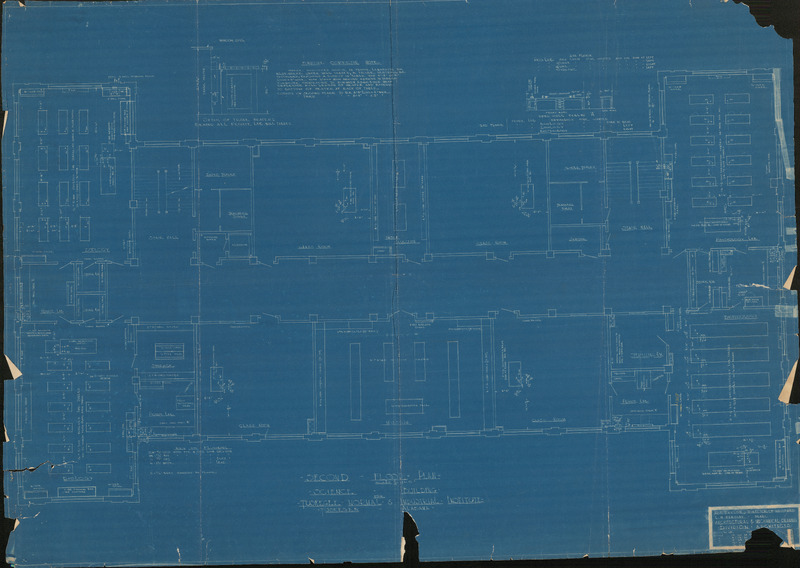
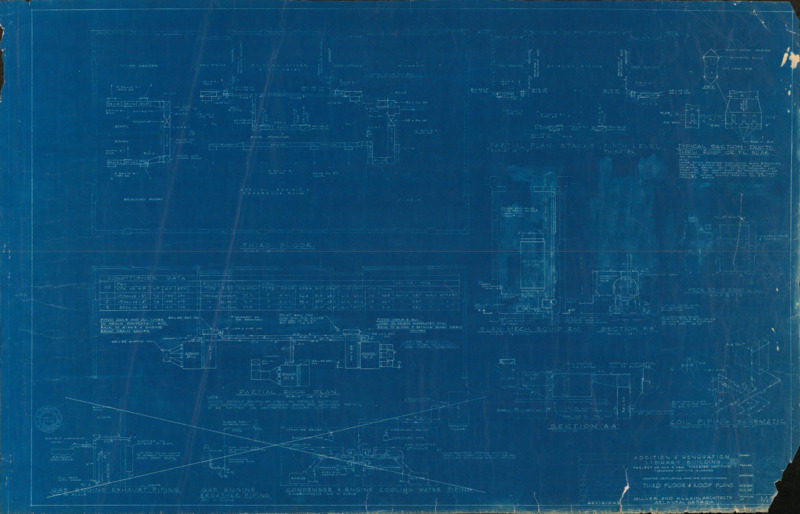
A mechancial HVAC drawing blueprint of the additions and renovations for the Library Building regarding the 3rd Floor and Roof Plans at Tuskegee Institute located in Tuskegee, Alabama.
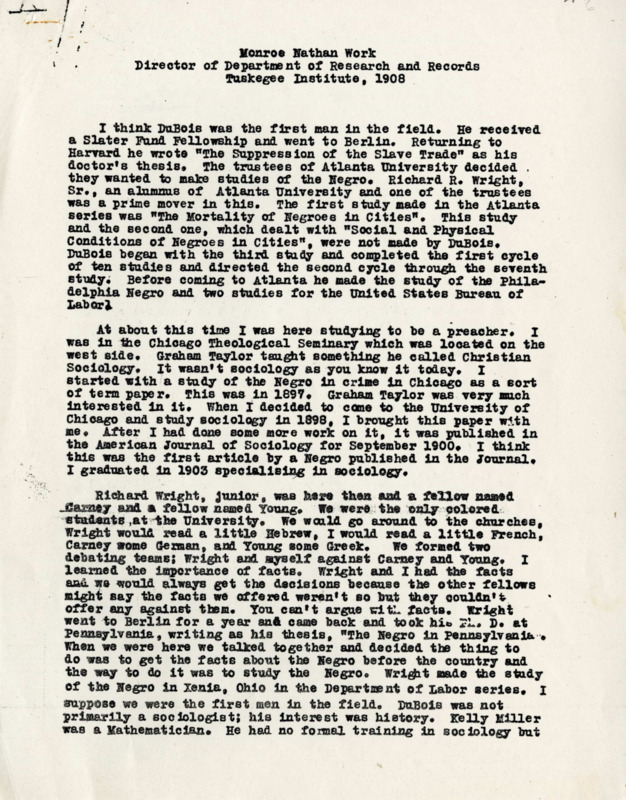
Five pages on Monroe N. Work's life, including his time at Georgia State College with his achievements and honors. At the time of writing, Jessie Guzman was the director of the Department of Research and Records at Tuskegee. Delivered at Institute Chapel.