The HCAC public history focused digital archive cataloging is an ongoing process, and we may update this record as we conduct additional research and review. We welcome your comments and feedback if you have more information to share about an item featured on the site, please contact us at: HCAC-DigiTeam@si.edu
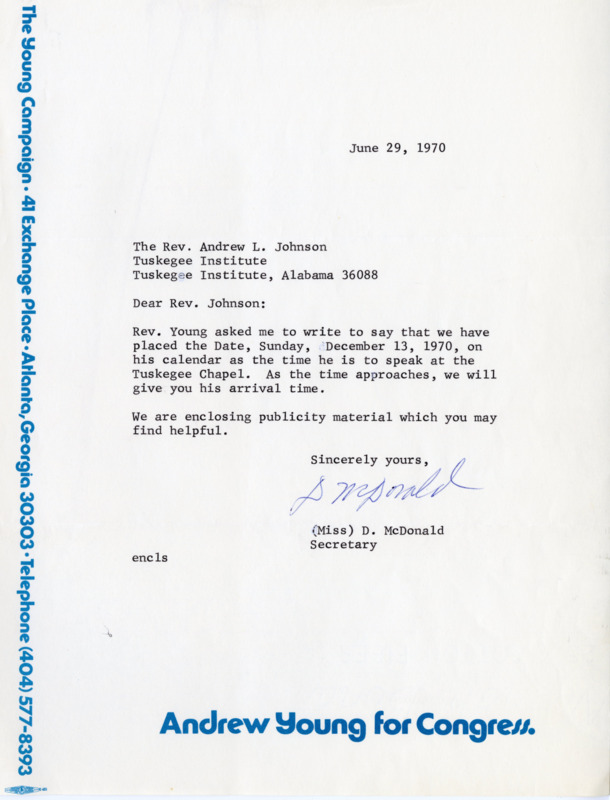
A Letter from Miss Dora McDonald to Chaplain Johnson that Congressman Andrew Young has saved the date of 12/13/1970 to speak at Tuskegee on his calendar.
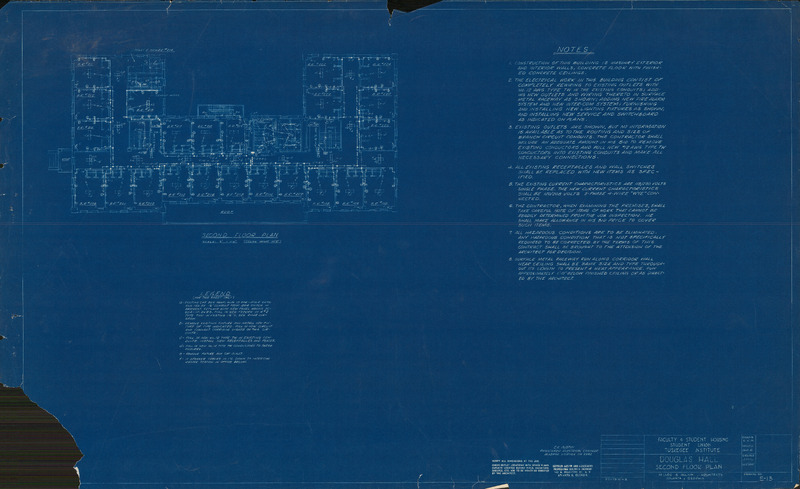
13th Electrical drawing blueprint for Douglass Hall Second Floor Plan blueprint. Drawing has construction notes, drawing legend, and electrical outlet layout.
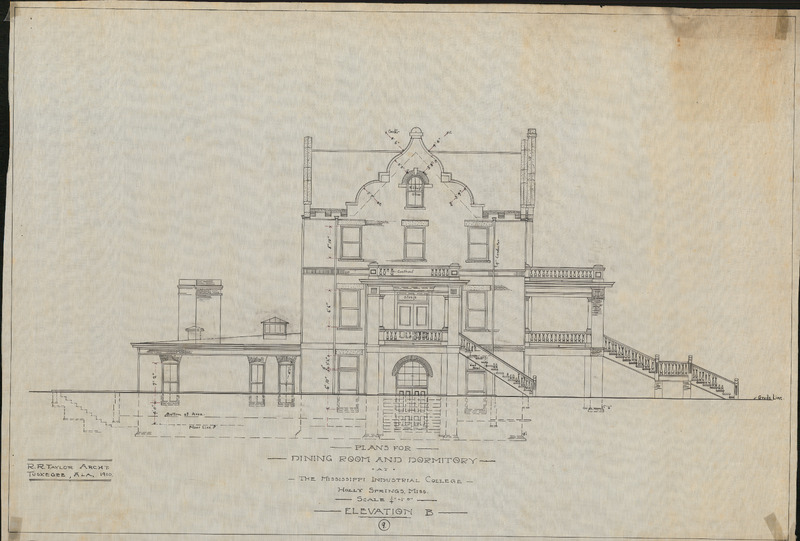
A black and white architectural drawing crafted by hand by Robert R. Taylor in 1910 for a dormitory/dining hall for the Mississppi Industrial College located in Holly, Springs Mississippi. The Drawing Scale is 1/4 1'0'' Elevation B Drawing page Number 9. This is the front face of the proposed building.
Andrew L. Johnson stresses the importance of asking the right questions in faith and life, drawing on the prophet Jeremiah’s warnings to King Zedekiah to emphasize genuine inquiry, gratitude and futures to faithful obedience.
Arthaniel Harris emphasize divine guidance and attentiveness in leadership, drawing on Moses’ early life, the importance of responding to others’ needs and God’s call, and the role of early nutrition in brain development.
Benjamin N. Smith's sermon highlighted the majesty and universality of God's love, exploring its four dimensions and the promise of eternal life, while honoring the Boone Methodist choir and Dr. Joseph S. Hines for his academic and Christian contributions.
Gerhardt W. Hyatt discussed the human struggle with powerlessness, referencing biblical stories of John the Baptist and Jesus feeding the multitude, and stressed the importance of recognizing personal limitations and seeking divine help.
John Hurst Adams criticized modern society's reliance on human institutions and technological solutions, arguing that true solutions lie in spiritual commitment and moral excellence.
Vincent A. Edwards presents Jesus as the gate for the sheep to stress authentic Christian living, urging believers—especially educators in Head Start programs—to model integrity, responsibility, and righteous guidance, and concluding with a prayer for wisdom, strength, and moral grounding for the Tuskegee Institute community.
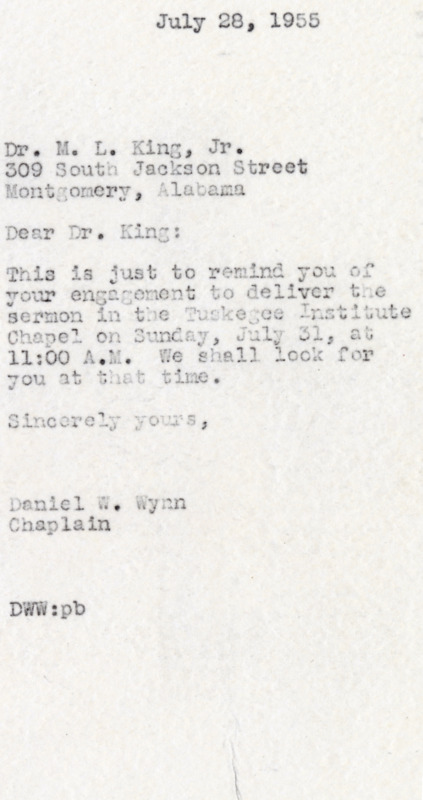
A letter from Chaplain Wynn to Dr. Martin Luther King Jr. on onion skin paper reminding Dr. King of his preaching engagement on 07/31/1955 at Tuskegee Institute’s Chapel at 11am.
Dr. Benjamin E. Mays’ sermon at Tuskegee University urged students to integrate tradition with progress, value historical memory, and pursue noble ideals over longevity, emphasizing that a meaningful life is defined by purpose and self-reflection.
Shirley Chisholm, the first black woman elected to serve in the U.S. Congress, emphasizing the need for systemic change and collective action to achieve racial equality and social justice.
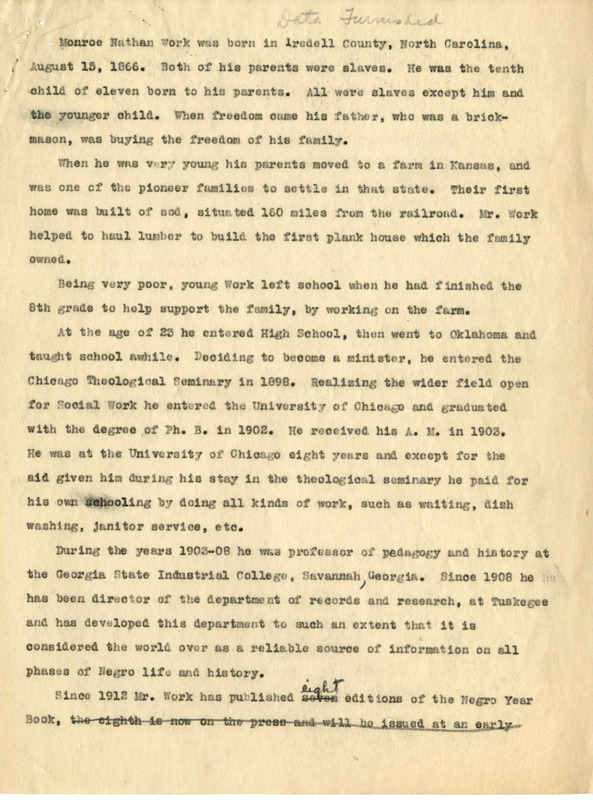
Four-page document containing biographical information about Monroe N. Work, such as his early life, education, professional accomplishments, and membership in organizations. The summary ends with an overview of Work's relationship with his wife, Florence Henderson Work.
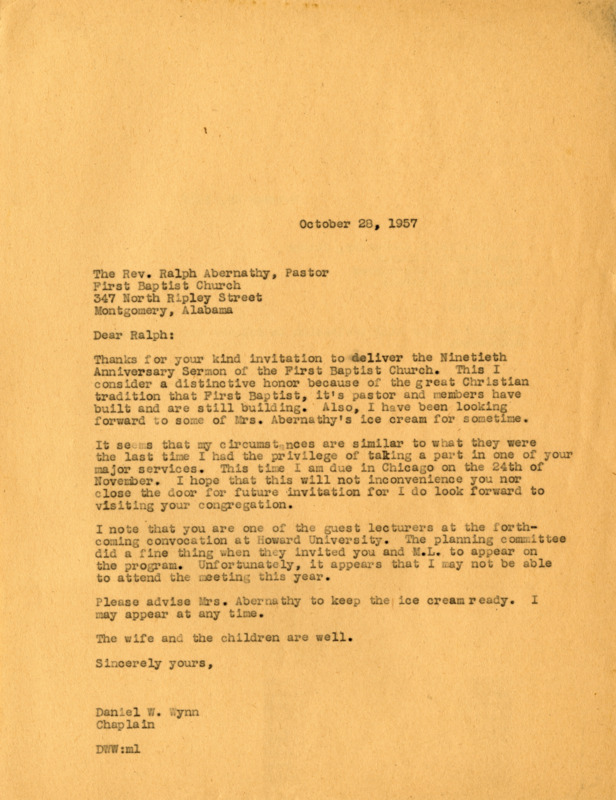
A letter from Chaplain to Rev. Ralph Abernathy expressing his regret that he will not be able to be the guest speaker for First Baptist Church nintieth celebration.
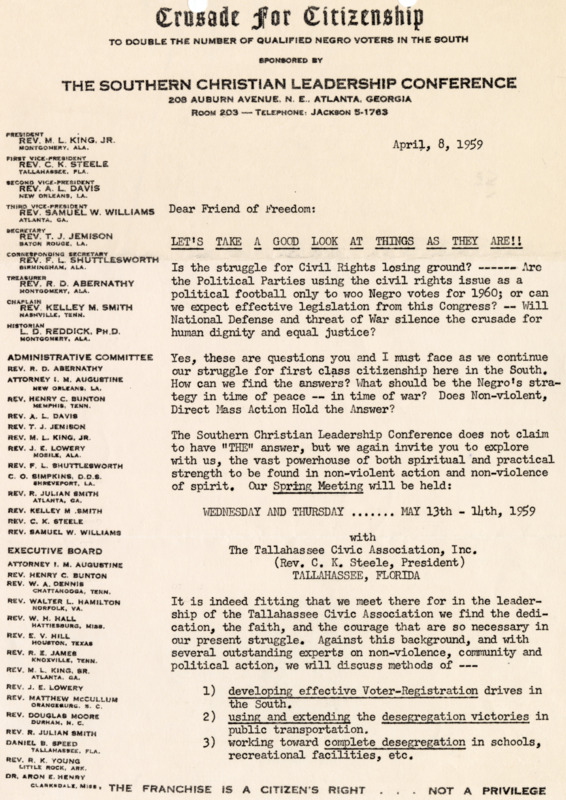
A program detailing the events of the Southern Christian Leadership Conference being held in Tallahassee, FL during May 13-14 1959. Dr. King is inviting people who are interested in hearing and learning about the practices of non-violence to attend the conference hosted by the Tallahassee Civic Association.
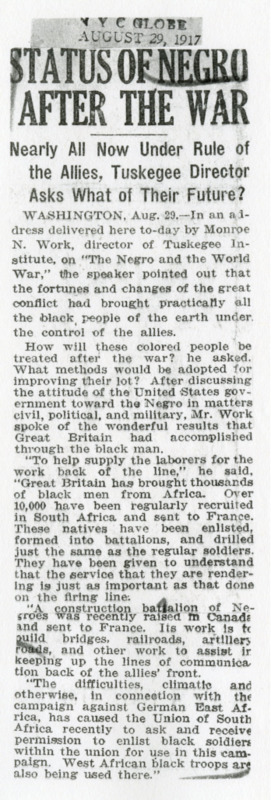
A newspaper article written discussing Monroe N. Work's speech on Negroes after World War I. The author writes how will the colored man should be treated following the war by the victors and points to Great Britain as an Example.
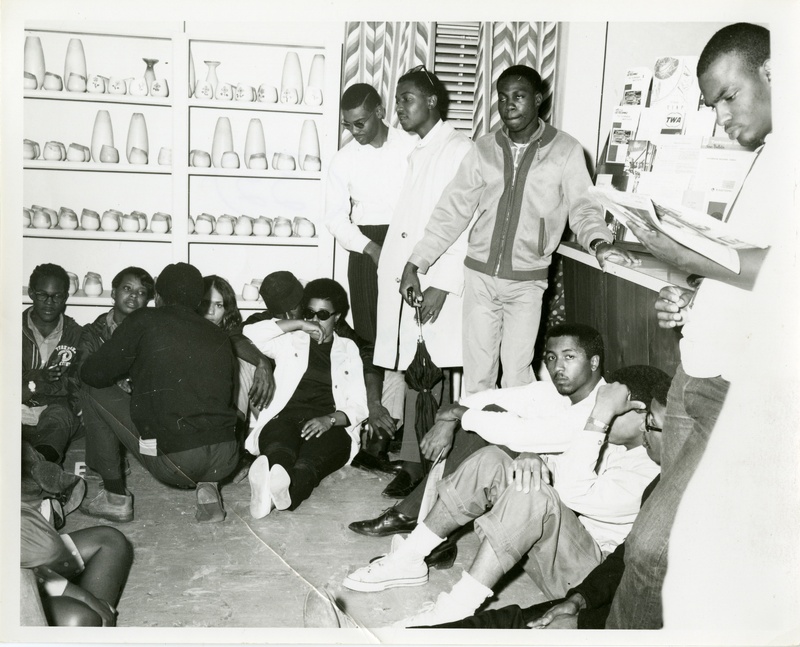
Black and white image of Tuskegee Institute students marching in response to the shooting and death of SNCC member and Tuskegee Institute political science student Sammy Younge Jr. in 1966.
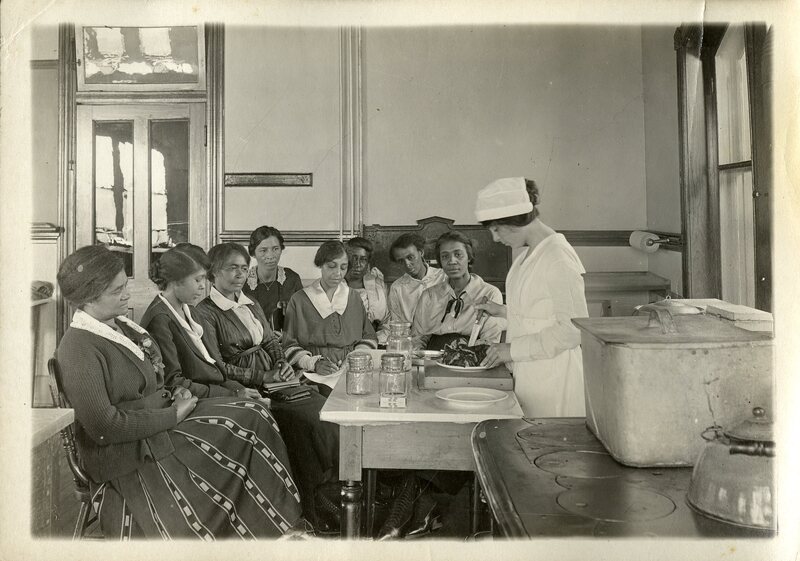
A photo taken by C.M. Battey showing the early years of Tuskegee University. This is an image of Black female students learning the skill to preserve products in a can.