The Margaret Walker Center is an archive and museum dedicated to the preservation, interpretation, and dissemination of African American history and culture. Founded as the Institute for the Study of the History, Life, and Culture of Black People by Margaret Walker in 1968, the Center seeks to honor her academic, artistic, and activist legacy through its archival collections, exhibits, and public programs. Open to the public, the Center houses significant records like the papers of the late Margaret Walker; those of the former U.S. Secretary of Education, Roderick Paige; and an oral history department that includes nearly 1000 interviews. It also offers museum and exhibit spaces that highlight the Center’s collections and the history of Jackson State University.
Curated By
Garrad Lee
Date Modified
2025-12-12
Rights
All rights held by the Margaret Walker Center. For permission to publish, distribute, or use this image for any other purpose, please contact Margaret Walker Center, Jackson State University, 601-979-3935 Attn: Center Director
About This Record
The HCAC public history focused digital archive cataloging is an ongoing process, and we may update this record as we conduct additional research and review. We welcome your comments and feedback if you have more information to share about an item featured on the site, please contact us at: HCAC-DigiTeam@si.edu
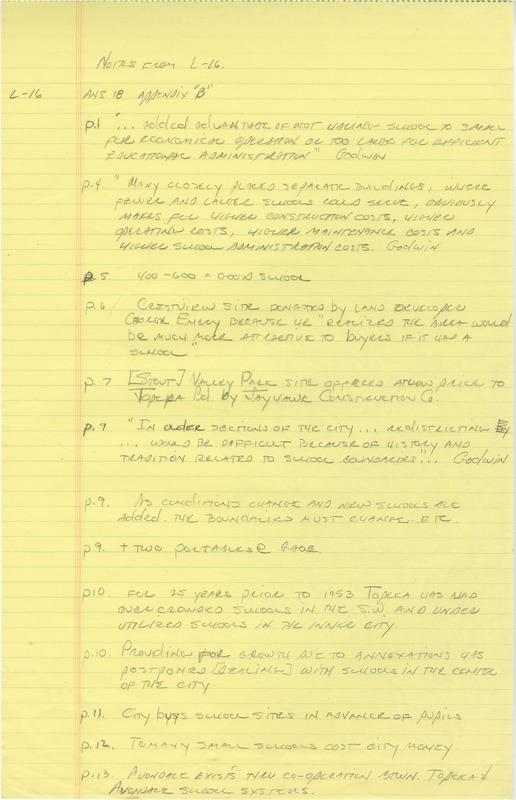
Case Data and Exhibits for Brown III, a relitigation of Brown v. Topeka Board of Education (1954) that corrected resegregation issues caused by open enrollment school choice in 1992. William Lamson’s notes in response to a court document referred to as L-16, Appendix B. The notes are about land usage and school construction in Topeka, Kansas.
Case Data and Exhibits for Brown III, a relitigation of Brown v. Topeka Board of Education (1954) that corrected resegregation issues caused by open enrollment school choice in 1992. William Lamson’s preliminary report on demographic trends in Topeka, Kansas, and the effects on the racial makeup of area schools, specifically elementary schools.
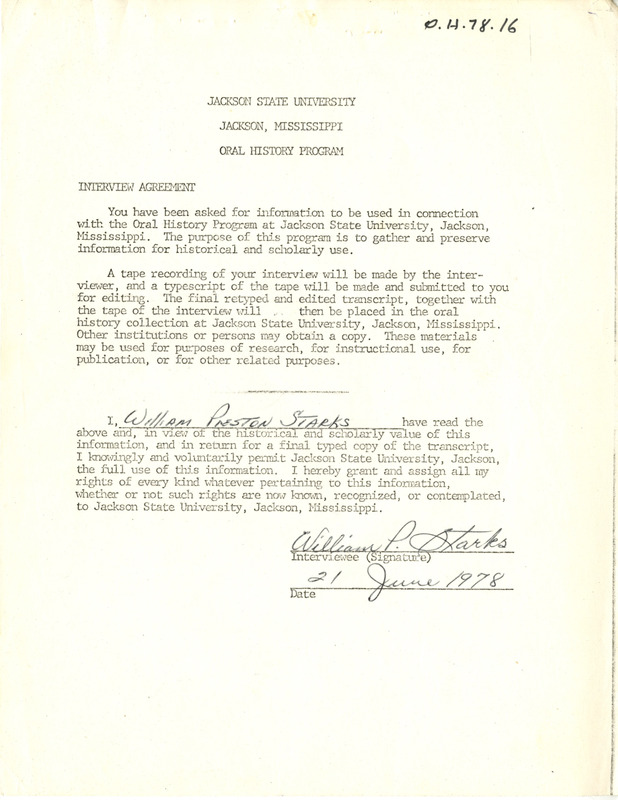
William Preston was born in Jackson in 1921 and worked as a mail carrier for the City of Jackson. In the interview, Mr. Preston talks about the food culture in the Farish Street District, including the Big Apple Inn, Big John's, and other restaurants located in the district. The transcript is heavily edited with handwritten notes.
Willie Crump was part of the group that started the first Head Start program in Edwards, Mississippi, in 1965. She talks about her previous work in the community and working with her daughter on the Edwards Head Start program. She also recounts some of the obstacles they faced while getting the center going.
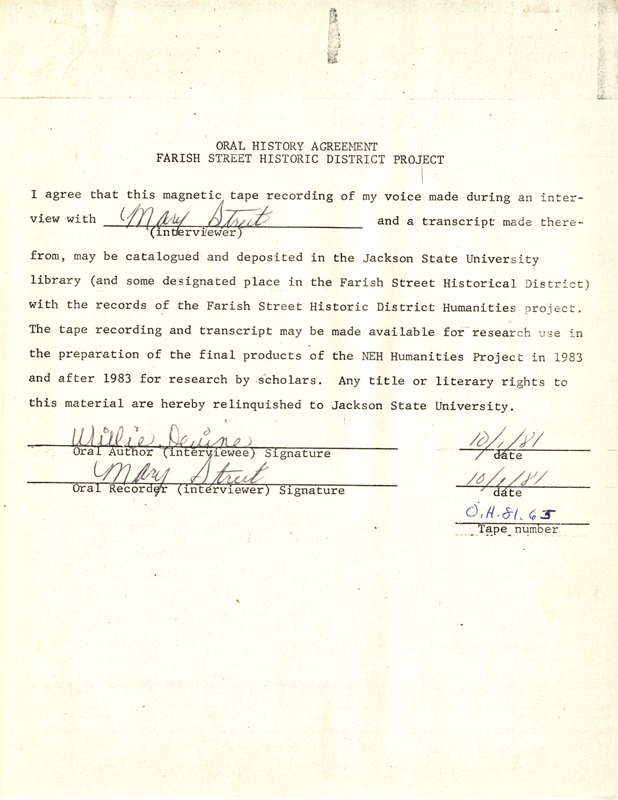
Willie Devine lived many years in the Farish Street District. He talks about growing up and the activities he did, including swimming at the newly built pool and the music and dancing in the district. He recounts the harassment of young Black children by White people on the streets when he was in grade school.
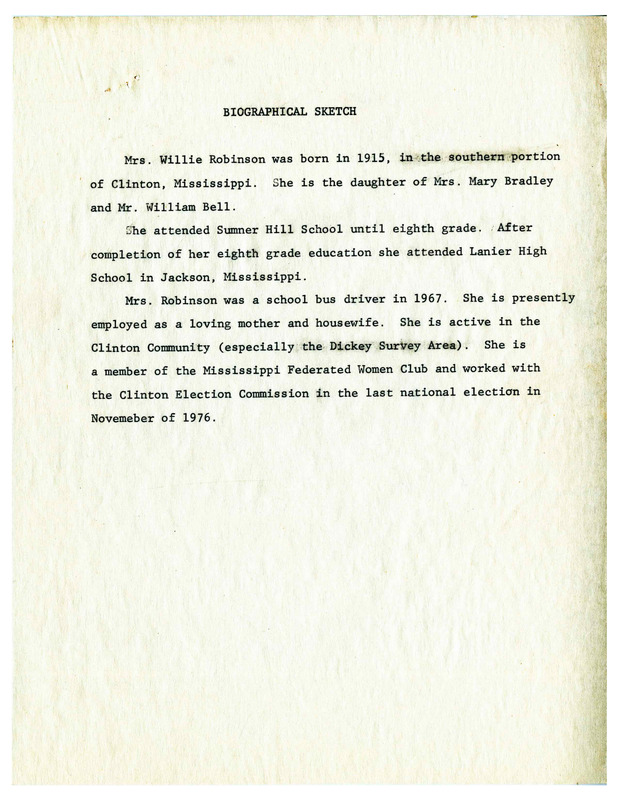
Mrs. Willie Robinson was born in Clinton and lived there her entire life, remaining very involved in the community and local politics. In the interview, she talks about the Dickey Survey Area, a plot of land bought in the northwest part of Clinton for Black residents and she discusses the growth of Clinton and its effect on the school system.
Willie Daugherty worked at Head Start in Benton County, Mississippi. She speaks about educators, church leaders, and others who had an influence on her as a teacher and community leader. She also gives her opinions on the future of Head Start. The Interview is incomplete, the first part of the recording is missing.
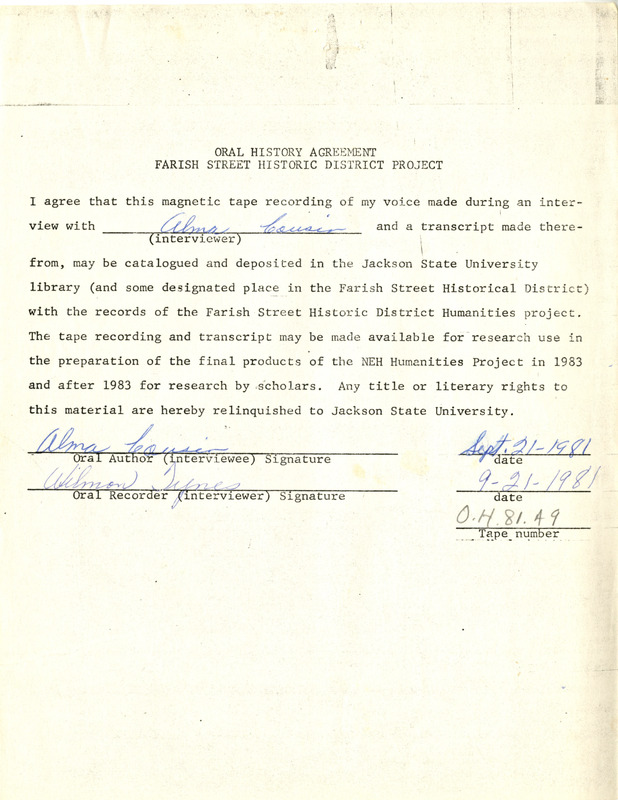
Wilmon Tynes has lived in the Farish Street District since she was 6 weeks old. She left for Chicago at the age of 10 for several years and moved back for good after that. Ms. Tynes talks about growing up in the Farish Street Historic District, recalling her church, education, and the music she heard at clubs like Crystal Palace.
A white political campaign button in support of Rev. Jesse L. Jackson for president in the 1988 Democratic Party primary. Rev. Jackson more than doubled his vote total from the 1984 race and finished the primary in second place behind eventual Democratic nominee Michael Dukakis.
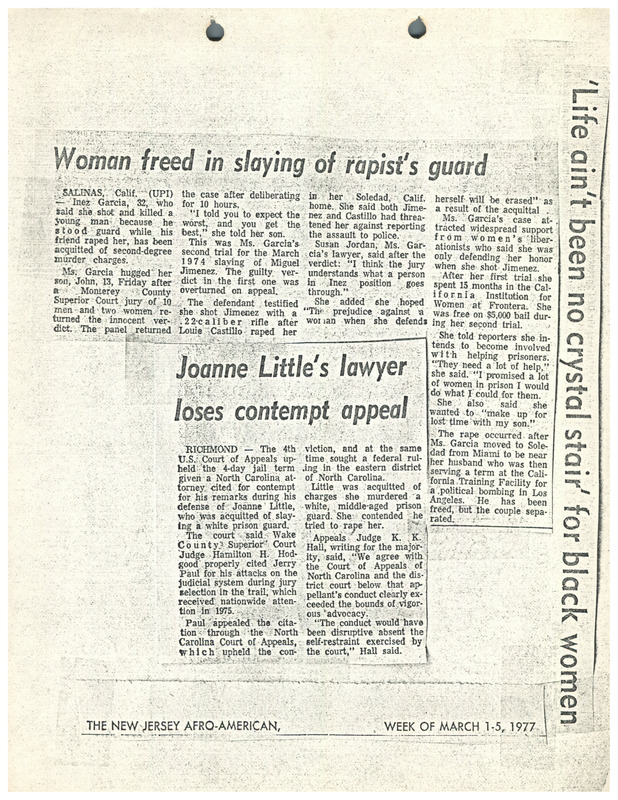
A newspaper article from The New Jersey Afro-American about Inez Garcia, a woman whose case became a rallying cry for feminists after she was acquitted for killing a man she says helped rape her. Garcia became a symbol for a woman’s right to defend herself. She says that she will go on to help other women who are imprisoned.
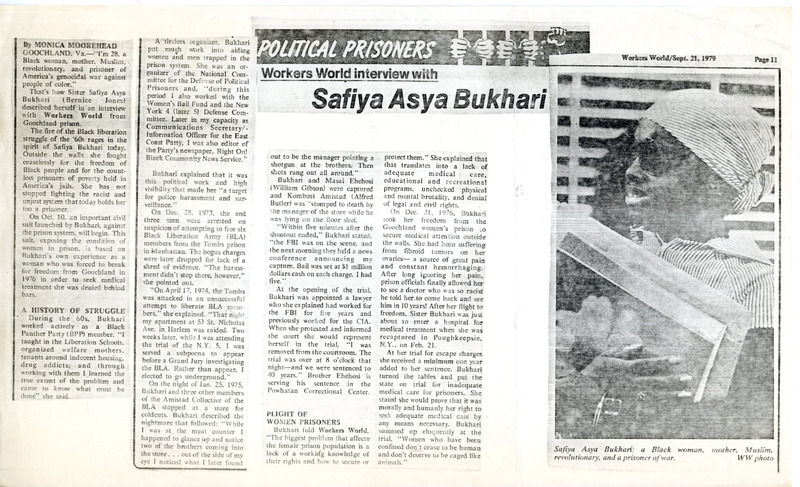
A newspaper article from Workers World. The writer interviews Safiya Asya Bukhari about her work in the community and with the Black Panthers and how that work brought police attention to her. At the time she was imprisoned at the Virginia Correctional Center for Women after being convicted in 1975 on weapons, murder, and robbery charges.
The interview was used for a paper that Mr. Langdon wrote for Dr. Alferdteen Harrison's Summer 1977 Workshop on Oral History. He outlines the history of Head Start in Mississippi and writes about his research goals and outcomes and creates a lesson plan for the workshop.
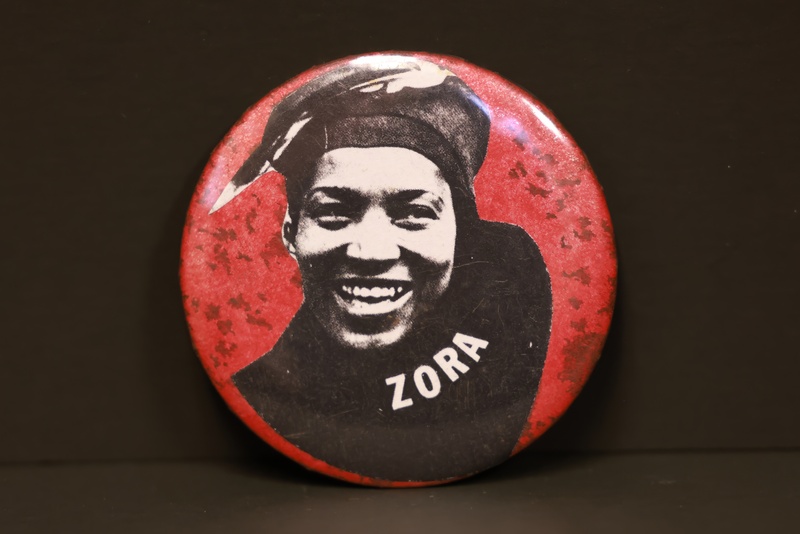
A multi-colored button with a photo of Zora Neale Hurston. The text reads “Zora.” Zora Neale Hurston was an author, filmmaker, and researcher, with a focus on African American and Caribbean folklore. Her most famous novel is “Their Eyes Were Watching God” and she wrote over 50 other works, including novels, short stories, plays, and essays.